Plant safety
Is Croton Toxic to Dogs?
Codiaeum variegatum · Euphorbiaceae
Also called Garden croton, Fire croton, Variegated croton, Joseph's coat
Toxic to dogs
Severity: Mild
Yes, mildly. The houseplant sold as croton (Codiaeum variegatum) has an irritant sap that usually causes drooling, vomiting or diarrhea if chewed, and it can irritate the skin and eyes. The ASPCA has no croton entry, so this rating comes from Pet Poison Helpline.
- Toxic parts
- Sap in the leaves, stems and roots, All parts (NC State Extension)
- Toxic compounds
- Irritant sap with diterpene esters (per NC State Extension)
- Where you’ll find it
- House and garden
Signs of poisoning
- Drooling
- Mouth irritation
- Vomiting
- Diarrhea
- Skin redness or mild irritation from the sap
- Eye pain and redness if sap gets in the eyes
Why it’s harmful to dogs
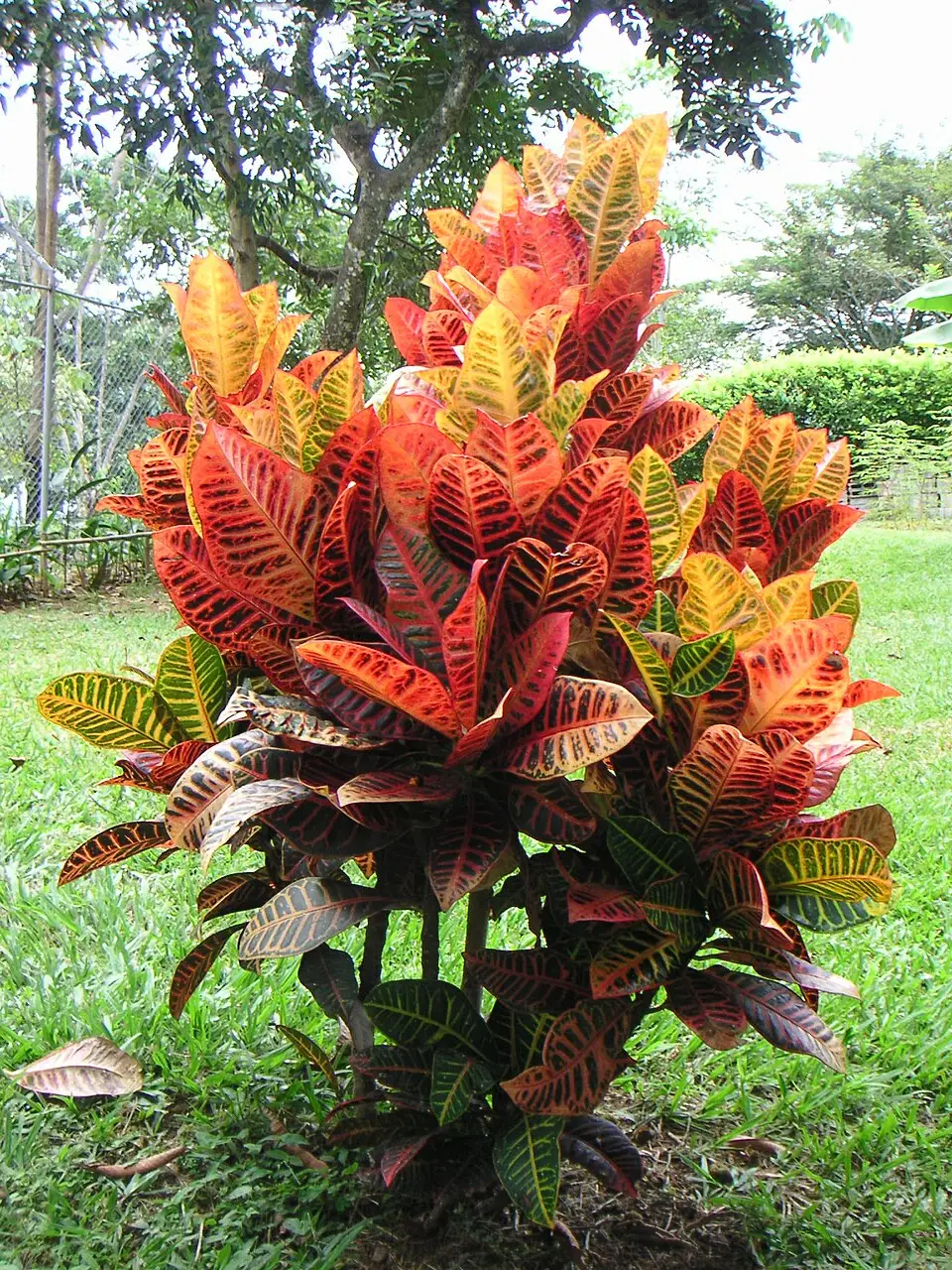
Croton is the shrubby houseplant with glossy, leathery leaves splashed with red, orange, yellow, pink and green. Its botanical name is Codiaeum variegatum, and NC State Extension places it in the spurge family, Euphorbiaceae, the same family as poinsettia. NC State notes it is most often grown indoors, though it can be an outdoor shrub in frost-free climates.
The ASPCA's plant database has no entry for Codiaeum or for anything called croton; we checked its full list on 7 November 2026, and the ASPCA says the list isn't meant to be all-inclusive. So the rating here comes from Pet Poison Helpline, which lists croton under Codiaeum variegatum. It says eating the plant may cause mild mouth and stomach irritation, with drooling, vomiting or diarrhea, and the sap in the leaves, stems and roots can mildly irritate skin. Its entry for miniature croton adds that sap in the eye causes marked pain and redness.
NC State Extension agrees on the low severity. It names diterpene esters as the irritant, says the plant is toxic only if large quantities are eaten, and notes the sap can cause a skin rash.
Garden croton vs the genus Croton
Here's the confusing part: the houseplant called croton isn't in the genus Croton. That's a separate group in the same spurge family.
| Garden croton (the houseplant) | Genus Croton | |
|---|---|---|
| Botanical name | Codiaeum variegatum | Croton species, such as woolly croton or hogwort (C. capitatus) |
| Where you meet it | Pots indoors; garden shrub in frost-free areas | Woolly croton is a weed native to the central and eastern US that can turn up in gardens and flower beds |
| Irritant | Diterpene esters in the sap | Croton oil (woolly croton) |
| Effects | Mild mouth, stomach, skin and eye irritation | Woolly croton: vomiting, diarrhea, colic and skin irritation with blisters; NC State says fatal poisoning is rare |
If your dog chewed a weed called croton, goatweed or hogwort on a walk, tell your vet that name, since it's a different plant from the one on your windowsill.
If your dog ate croton
Take any leaf pieces out of your dog's mouth if you can do it safely, and move the plant. Watch for drooling, pawing at the mouth, vomiting and diarrhea. Pet Poison Helpline describes these signs as mild for croton.
Call your vet if the signs last or get worse, or if your dog ate a lot. Call now if sap got in your dog's eyes, which Pet Poison Helpline says causes marked pain and redness, or if skin irritation doesn't settle. In the US, ASPCA Animal Poison Control is at (888) 426-4435 and Pet Poison Helpline at (855) 764-7661 (fees may apply); elsewhere, call your local emergency vet. Don't make your dog vomit at home.
If your dog chewed an outdoor weed rather than a houseplant, say so and give any name you know.
Keeping your dog safe
Keep crotons on a high stand or in a room your dog can't enter, and pick up dropped leaves. NC State notes the sap can cause a skin rash, so wear gloves when you prune and bag the trimmings so your dog can't chew them.
For colorful leaves, our prayer plant and peperomia pages cover two plants rated non-toxic.
Dog-safe alternatives
Frequently asked questions
Is croton toxic to dogs?
Mildly. Pet Poison Helpline says croton (Codiaeum variegatum) can irritate the mouth and stomach, causing drooling, vomiting or diarrhea, and its sap can irritate skin and eyes.
Why isn't croton on the ASPCA list?
The ASPCA says its plant list covers the most frequently encountered plants and isn't all-inclusive. It has no croton entry, so we use Pet Poison Helpline and NC State Extension instead.
Is the houseplant croton the source of croton oil?
No. NC State names croton oil as the toxin in woolly croton, a member of the genus Croton. The houseplant is Codiaeum variegatum, a different genus whose irritants are diterpene esters.
Can croton sap hurt my dog's eyes?
Yes. Pet Poison Helpline says sap in the eye causes marked pain and redness. Call your vet promptly.
Is croton related to poinsettia?
Yes. NC State Extension places croton in the spurge family, Euphorbiaceae, which also includes poinsettia.
Written from veterinary sources by the Pawsplained editorial team. Not yet reviewed by a veterinarian; this is general information, not a diagnosis or treatment plan. Updated Nov 7, 2026. Editorial policy


