Plant safety
Are Paperwhites Toxic to Dogs?
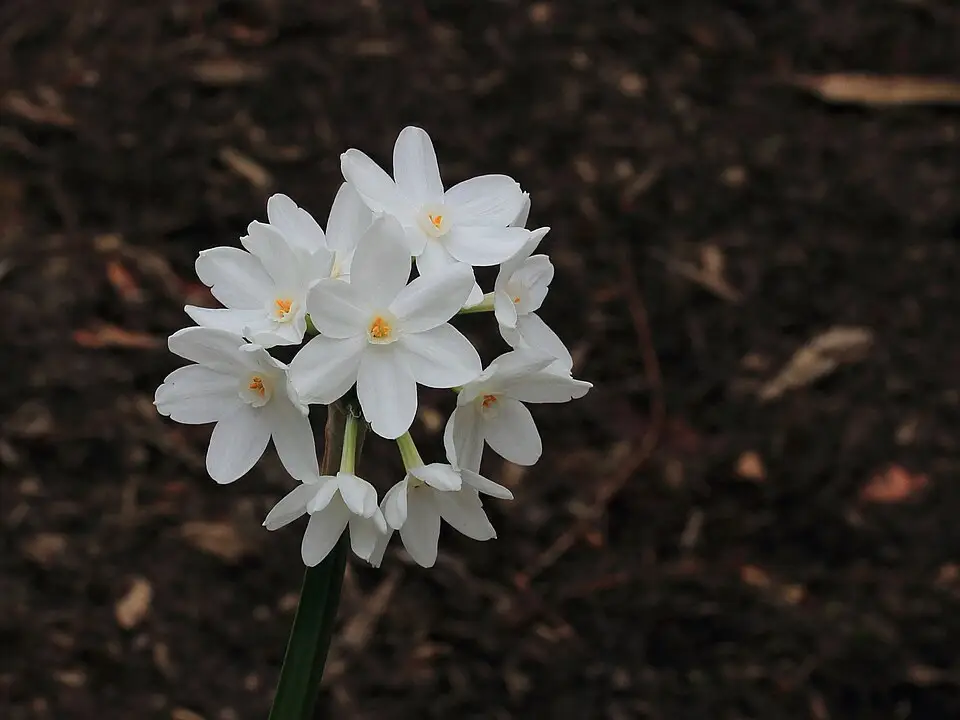
Narcissus papyraceus (sometimes listed under Narcissus tazetta) · Amaryllidaceae
Also called Paper white, Paperwhite narcissus, Narcissus
Toxic to dogs
Severity: Moderate
Yes. Paperwhites are a type of narcissus, and the ASPCA lists them as toxic to dogs. The bulb is the most poisonous part: a nibble usually means vomiting and drooling, but a chewed bulb can cause tremors, low blood pressure and heart rhythm problems.
- Toxic parts
- Bulbs (most toxic), Whole plant
- Toxic compounds
- Lycorine and other alkaloids
- Where you’ll find it
- Houseplant
Signs of poisoning
- Vomiting
- Drooling
- Diarrhea
- Abdominal discomfort
- Dehydration
- Weakness
- Tremors
- Low blood pressure
- Irregular heart rhythm
- Convulsions after large amounts
Why it’s harmful to dogs
Paperwhites are the small, fragrant white flowers people grow indoors in winter. They are a type of narcissus, the same group as daffodils, and the ASPCA's "Paper White" entry lists them as toxic to dogs, cats and horses.
The toxin is lycorine, along with other alkaloids. The ASPCA records vomiting, drooling and diarrhea, and after large amounts, convulsions, low blood pressure, tremors and heart rhythm problems. It also says the bulbs are the most poisonous part. Pet Poison Helpline warns that the vomiting can be severe enough to cause dehydration, weakness and even shock.
Amount matters. The Merck Veterinary Manual says a small dose causes few or no signs and most exposures settle without treatment, while large doses bring vomiting, abdominal discomfort, diarrhea, dehydration and electrolyte problems.
The bulb, the pebbles and the water
Paperwhites are usually grown in a dish, with the bulbs set in stones, gravel, marbles or glass beads and topped up with water, as Cornell's Flower Bulb Research Program describes. That puts the most toxic part of the plant in plain view, and a dog that tips the bowl over gets bulbs, stones and water all at once.
- Bulbs: the most toxic part, according to the ASPCA.
- Pebbles and marbles: not poisonous, but PetMD notes that swallowed rocks can block the gut, which often needs surgery.
- The water: we found no poison control source that rates water from a paperwhite dish on its own. Tell your vet if your dog drank it.
- "Gin trick" water: Cornell's Flower Bulb Research Program found that swapping the water for a 4 to 6 percent alcohol solution keeps stems shorter, using gin or a similar spirit, or rubbing alcohol diluted further. If you did this, your dog has also had alcohol, so mention it on the phone.
If your dog ate paperwhites
Clear any bulb pieces or leaves from your dog's mouth if it's safe to do so, and work out what was eaten: flowers, leaves, a bulb, stones or the water. Then call your vet, an emergency clinic or a poison helpline before doing anything else. In the US, ASPCA Animal Poison Control is at (888) 426-4435 and Pet Poison Helpline at (855) 764-7661 (fees may apply); elsewhere, call your local emergency vet. Don't try to make your dog vomit at home.
A nibbled flower or leaf often causes only drooling or vomiting. A chewed bulb, or a large amount of plant, can bring on tremors, convulsions, low blood pressure or an irregular heartbeat, according to the ASPCA. For large exposures, the Merck manual describes supportive care such as fluids and anti-nausea treatment.
Take the bulb packet or a photo with you, and say whether the water had alcohol in it.
Keeping your dog safe
Grow paperwhites where your dog can't reach them: a high windowsill, a closed room or a heavy dish on a shelf. Keep unplanted bulbs in a closed container.
When the flowers fade, put spent bulbs in a lidded bin rather than an open compost heap your dog can raid.
For winter flowers with less worry, a Christmas cactus or an orchid is a friendlier choice. Amaryllis, another holiday bulb, is toxic too.
Dog-safe alternatives
Frequently asked questions
Are paperwhites the same as daffodils?
They belong to the same genus, Narcissus. The ASPCA gives paper white, daffodil, jonquil and narcissus the same toxic profile for dogs.
Is paperwhite water toxic to dogs?
No poison control source we checked rates the water on its own. Call your vet or a poison line if your dog drank it, and say whether you added alcohol to keep the stems short.
Which part of a paperwhite is most toxic?
The bulb. The ASPCA says bulbs are the most poisonous part, and Pet Poison Helpline says they hold the highest concentration of toxins.
Is one bite an emergency?
Not always, but call. Merck says small doses cause few or no signs, yet bulbs and larger amounts can cause tremors and heart rhythm problems, and only a vet can judge your dog's risk.
Written from veterinary sources by the Pawsplained editorial team. Not yet reviewed by a veterinarian; this is general information, not a diagnosis or treatment plan. Updated Nov 7, 2026. Editorial policy